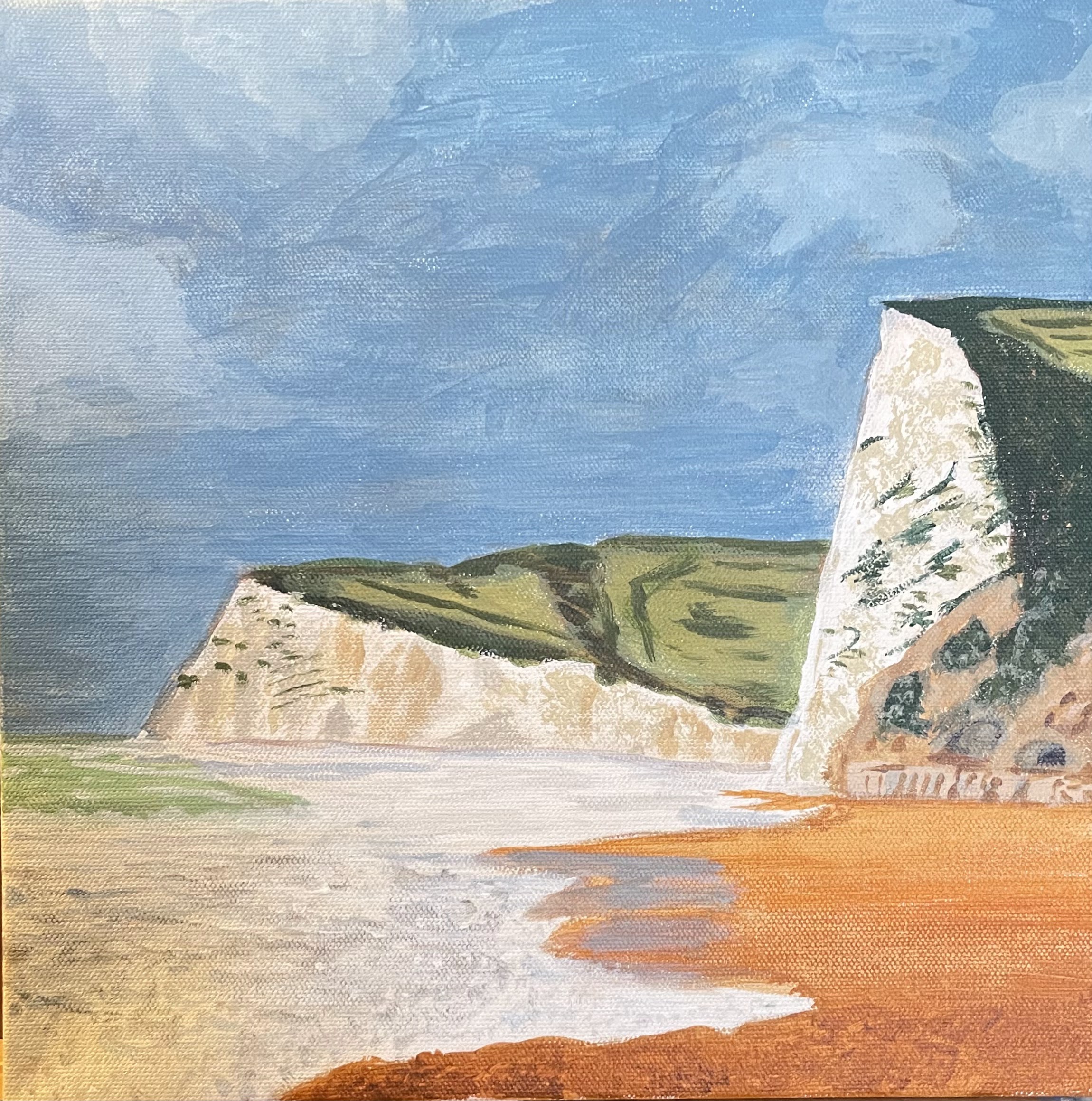
Category: Art practice

  • Finding Creative Inspiration in Nature: The Art of Slowing Down

    Finding Creative Inspiration in Nature: The Art of Slowing Down

    Slowing Down Enough to Really See

    Sometimes the inspiration for a painting doesn’t come from searching for something new, but from learning to see what is already there.

    When I slow down outdoors — whether walking in the countryside, visiting a botanical garden, or simply stepping into my own garden — I begin to notice things I would otherwise miss. The way light rests on leaves. Subtle changes in color across the sky. The reflections of things in the water.

    These moments rarely feel dramatic or important at the time. They are small and ordinary. But they stay with me, especially if I use my camera to capture those moments.

    Over time, these quiet observations find their way into my paintings.

    Art has taught me that seeing is not automatic. It is something we learn through patience and attention. Painting slows my eyes down. Instead of glancing quickly, I begin to notice shape, shadow, texture, and color more carefully. What once seemed simple becomes layered and alive.

    There is something deeply spiritual about this kind of attention. Slowing down to notice the world can cause us to feel grateful — an acknowledgment that creation is full of beauty if we are willing to pause long enough to see it.

    In a busy world that encourages constant movement and productivity, choosing to observe quietly can feel almost countercultural. Yet these moments of stillness often become the source of creativity. They remind me that inspiration does not come from striving, but from paying attention.

    Many of my paintings begin not in the studio, but in these small encounters with nature — moments when color, light, and stillness come together in a way that invites reflection.

    The garden, the landscape, and even a single leaf can become the beginning of something new on canvas.

    Perhaps creativity sometimes begins with nothing more complicated than this: slowing down enough to really see.

    Many of these quiet moments in nature eventually find their way into my paintings. If you’d like to see how these reflections take shape on canvas, you can explore my artwork here.

  • An at Home Daily Art Practice When Life is Busy

    a home art studio with a desk, chair and a window
    Photo by Sydney Moore on Unsplash

    There’s a quiet longing many artists carry — the desire to create consistently, without turning creativity into another task to manage. However, when life feels full, noisy, or demanding, even stepping into your home art studio can feel overwhelming. And yet, the ache to make something remains.

    A daily art practice doesn’t have to be long, impressive, or productive to be meaningful. It can be gentle. It can be small. And it can happen right where you are, at home, in the midst of ordinary life.

    This is an invitation to approach creativity not as a hustle, but as a companion.

    What a Gentle Art Practice Really Means

    A gentle daily art practice is not about discipline or output. It’s not about finishing pieces or keeping up appearances. Instead, it’s about showing up with openness, even when energy is low or time feels scarce.

    Gentle creativity makes room for:

    • Short sessions
    • Imperfect outcomes
    • Intuition over planning
    • Presence over productivity

    When art becomes a place of rest rather than pressure, it begins to nourish you instead of draining you.

    person painting watercolors with a palette
    Photo by Sean Bernstein on Unsplash

    Start Where You Are (Even If That’s Tired)

    One of the biggest myths about daily creativity is that you need a clear schedule, a quiet house, or the right mood. In reality, most meaningful art is made in the middle of life — not after it settles down.

    Your home art studio doesn’t need to be pristine or permanent. It can be a corner of a table, a basket of supplies, or a small space that waits patiently for you.

    If all you have is ten minutes, that is enough.

    A Simple Rhythm for Daily Art at Home

    Rather than a strict routine, consider creating a gentle rhythm. Something that feels supportive instead of demanding.

    Here’s a simple framework you can adapt:

    1. Begin with Stillness

    Before you create, pause. Take a breath. Let your mind settle.

    This could look like:

    • Sitting quietly for a moment
    • Saying a short prayer
    • Reading a line of Scripture or a reflective quote

    Starting this way helps you create from a place of presence, not urgency.

    2. Let Go of Outcomes

    A gentle daily art practice isn’t about finishing something every time you sit down. Some days will feel quiet or uncertain — and that’s okay.

    Therefore, think of your practice as tending a garden, not producing a product. Growth happens slowly, often unseen.

    painter palette on board
    Photo by Olia Gozha on Unsplash

    Creating Space for Art in a Busy Life

    Life doesn’t usually slow down for creativity — we make space for art within it.

    A few ways to do that at home:

    • Keep supplies visible and easy to access
    • Lower your expectations for what “counts” as art
    • Allow unfinished work to remain unfinished
    • Return to the same piece over several days or weeks

    Consistency grows not from effort, but from ease.

    When Art Becomes a Place of Rest

    For many of us, creating at home can become sacred ground — a place where we listen, respond, and rest.

    Art doesn’t need to earn its place in your life by being useful or profitable. Sometimes its greatest gift is simply helping you feel more like yourself again.

    In a culture that rushes, a gentle art practice becomes an act of quiet resistance.

    brown, blue and red paint brushes
    Photo by laura adai on Unsplash

    A Closing Invitation

    If you’ve been longing to create more consistently but feeling overwhelmed by life, let this be your permission to start small.

    Return to your art gently. Let it meet you where you are. Trust that even the smallest moments of creativity are forming something meaningful over time.

    If this way of creating resonates with you, I invite you to linger a little longer.

    Many of the ideas in this post grow out of my own daily art practice — slow, intuitive, and shaped by presence rather than pressure. You can nand see how this gentle rhythm takes visual form through color, texture, and layered abstraction.

    May it encourage you to trust your own creative pace and make space for beauty in the ordinary.