Tag: creativity

  • Finding Creative Inspiration in Nature: The Art of Slowing Down

    Finding Creative Inspiration in Nature: The Art of Slowing Down

    Slowing Down Enough to Really See

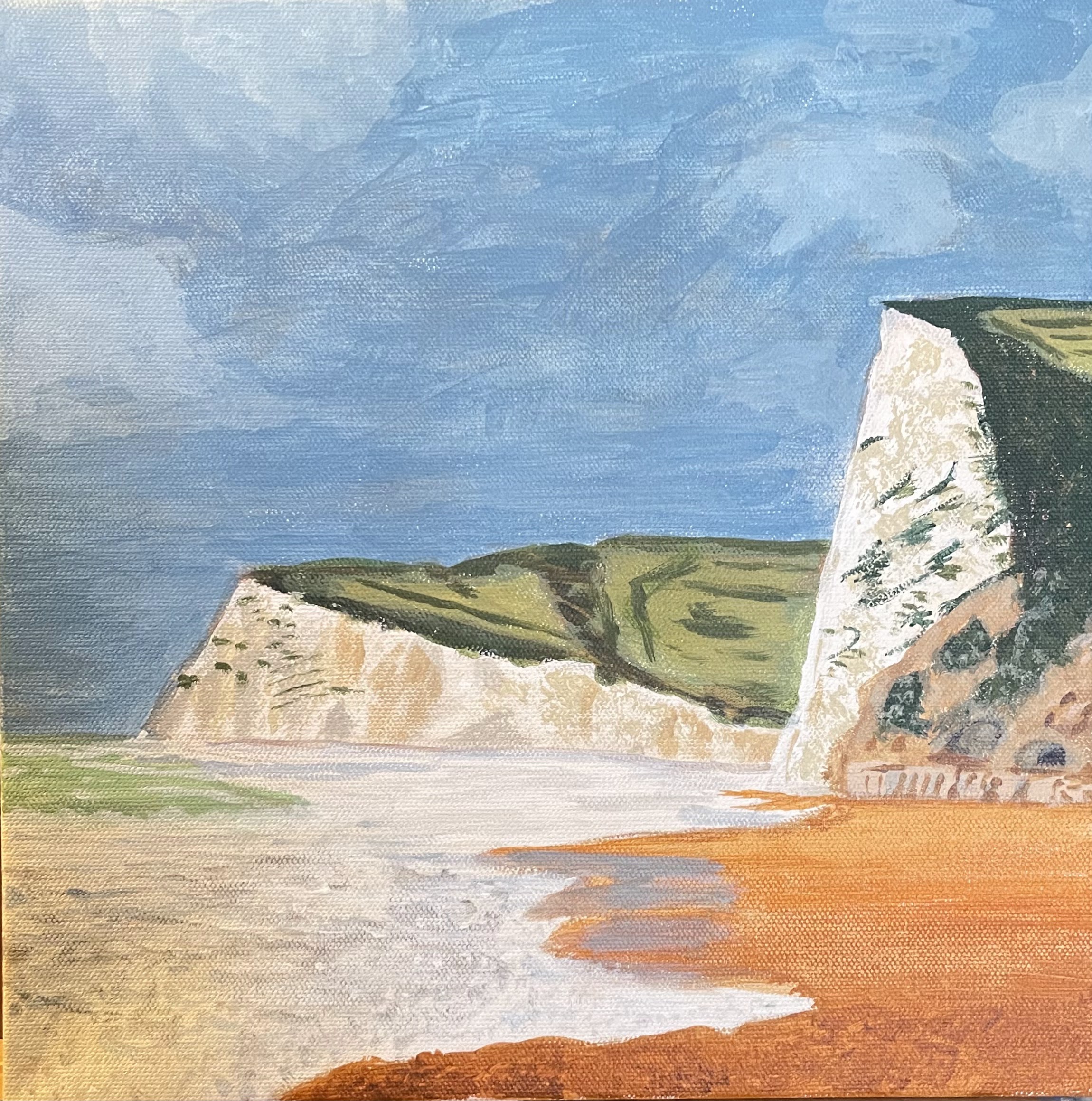
    Sometimes the inspiration for a painting doesn’t come from searching for something new, but from learning to see what is already there.

    When I slow down outdoors — whether walking in the countryside, visiting a botanical garden, or simply stepping into my own garden — I begin to notice things I would otherwise miss. The way light rests on leaves. Subtle changes in color across the sky. The reflections of things in the water.

    These moments rarely feel dramatic or important at the time. They are small and ordinary. But they stay with me, especially if I use my camera to capture those moments.

    Over time, these quiet observations find their way into my paintings.

    Art has taught me that seeing is not automatic. It is something we learn through patience and attention. Painting slows my eyes down. Instead of glancing quickly, I begin to notice shape, shadow, texture, and color more carefully. What once seemed simple becomes layered and alive.

    There is something deeply spiritual about this kind of attention. Slowing down to notice the world can cause us to feel grateful — an acknowledgment that creation is full of beauty if we are willing to pause long enough to see it.

    In a busy world that encourages constant movement and productivity, choosing to observe quietly can feel almost countercultural. Yet these moments of stillness often become the source of creativity. They remind me that inspiration does not come from striving, but from paying attention.

    Many of my paintings begin not in the studio, but in these small encounters with nature — moments when color, light, and stillness come together in a way that invites reflection.

    The garden, the landscape, and even a single leaf can become the beginning of something new on canvas.

    Perhaps creativity sometimes begins with nothing more complicated than this: slowing down enough to really see.

    Many of these quiet moments in nature eventually find their way into my paintings. If you’d like to see how these reflections take shape on canvas, you can explore my artwork here.

  • An at Home Daily Art Practice When Life is Busy

    a home art studio with a desk, chair and a window
    Photo by Sydney Moore on Unsplash

    There’s a quiet longing many artists carry — the desire to create consistently, without turning creativity into another task to manage. However, when life feels full, noisy, or demanding, even stepping into your home art studio can feel overwhelming. And yet, the ache to make something remains.

    A daily art practice doesn’t have to be long, impressive, or productive to be meaningful. It can be gentle. It can be small. And it can happen right where you are, at home, in the midst of ordinary life.

    This is an invitation to approach creativity not as a hustle, but as a companion.

    What a Gentle Art Practice Really Means

    A gentle daily art practice is not about discipline or output. It’s not about finishing pieces or keeping up appearances. Instead, it’s about showing up with openness, even when energy is low or time feels scarce.

    Gentle creativity makes room for:

    • Short sessions
    • Imperfect outcomes
    • Intuition over planning
    • Presence over productivity

    When art becomes a place of rest rather than pressure, it begins to nourish you instead of draining you.

    person painting watercolors with a palette
    Photo by Sean Bernstein on Unsplash

    Start Where You Are (Even If That’s Tired)

    One of the biggest myths about daily creativity is that you need a clear schedule, a quiet house, or the right mood. In reality, most meaningful art is made in the middle of life — not after it settles down.

    Your home art studio doesn’t need to be pristine or permanent. It can be a corner of a table, a basket of supplies, or a small space that waits patiently for you.

    If all you have is ten minutes, that is enough.

    A Simple Rhythm for Daily Art at Home

    Rather than a strict routine, consider creating a gentle rhythm. Something that feels supportive instead of demanding.

    Here’s a simple framework you can adapt:

    1. Begin with Stillness

    Before you create, pause. Take a breath. Let your mind settle.

    This could look like:

    • Sitting quietly for a moment
    • Saying a short prayer
    • Reading a line of Scripture or a reflective quote

    Starting this way helps you create from a place of presence, not urgency.

    2. Let Go of Outcomes

    A gentle daily art practice isn’t about finishing something every time you sit down. Some days will feel quiet or uncertain — and that’s okay.

    Therefore, think of your practice as tending a garden, not producing a product. Growth happens slowly, often unseen.

    painter palette on board
    Photo by Olia Gozha on Unsplash

    Creating Space for Art in a Busy Life

    Life doesn’t usually slow down for creativity — we make space for art within it.

    A few ways to do that at home:

    • Keep supplies visible and easy to access
    • Lower your expectations for what “counts” as art
    • Allow unfinished work to remain unfinished
    • Return to the same piece over several days or weeks

    Consistency grows not from effort, but from ease.

    When Art Becomes a Place of Rest

    For many of us, creating at home can become sacred ground — a place where we listen, respond, and rest.

    Art doesn’t need to earn its place in your life by being useful or profitable. Sometimes its greatest gift is simply helping you feel more like yourself again.

    In a culture that rushes, a gentle art practice becomes an act of quiet resistance.

    brown, blue and red paint brushes
    Photo by laura adai on Unsplash

    A Closing Invitation

    If you’ve been longing to create more consistently but feeling overwhelmed by life, let this be your permission to start small.

    Return to your art gently. Let it meet you where you are. Trust that even the smallest moments of creativity are forming something meaningful over time.

    If this way of creating resonates with you, I invite you to linger a little longer.

    Many of the ideas in this post grow out of my own daily art practice — slow, intuitive, and shaped by presence rather than pressure. You can nand see how this gentle rhythm takes visual form through color, texture, and layered abstraction.

    May it encourage you to trust your own creative pace and make space for beauty in the ordinary.

  • Abstract Art A Sharing of the Soul

    Abstract art is inspired less by what the artist sees and more by what they feel. Instead of copying the outside world, artists draw from emotions, memories, and inner experiences. Intuition often leads the process, guiding choices of color, shape, and movement without a fixed plan.

    The Tide is Turning

    This form of creativity allows freedom and personal expression. Abstract art can be inspired by music, nature, energy, or moments of reflection, turning invisible ideas into visual form. Because it comes from within, each piece invites viewers to find their own meaning and connection.

    As a person of faith, I find that prayer and meditation are practices that inspire my art and make a time of creativity even more satisfying.

  • 5 Budget-friendly ideas for a home art studio

    You don’t need a huge space or expensive supplies to create meaningful art at home. With a little creativity and intention, you can design a home art studio that feels inspiring, colorful, and uniquely yours—without breaking the bank. Here are five simple ideas to get you started.

    1. Choose a Small, Dedicated Creative Zone

    Your art studio doesn’t have to be an entire room. A corner of your bedroom, a section of the dining table, or even a closet workspace can work beautifully.

    In my house I have made the smallest bedroom, which contains bunk beds for my grandchildren to use when they come to stay, into my art studio. An inexpensive drop leaf table acts as my painting space, storage cubes hold many supplies and also an over the door shoe organizer holds tubes of paint and brushes when not in use.

    Having a dedicated spot, no matter how small, signals your brain that it’s time to create, helping ideas flow more freely.

    img_8515

    2. Decorating Your Space for Inspiration

    Decorating your studio doesn’t have to be costly. Creating a mood board is a simple way to add color and to inspire future projects. Printable art is an affordable way to add personality and motivation to your space. Choose designs to keep the environment visually stimulating. You can order prints and frame them with repurposed frames from thrift stores or simply use washi tape to display them.

    Plants are always a good addition to your art studio they bring a natural, colorful element into your space, making it feel more inviting and inspiring while you create. They can help improve air quality, reduce stress, and boost focus—benefits that are especially valuable during long art sessions.

    3. Repurpose What You Already Own

    Look around your home before buying anything new. I use mason jars to hold brushes, a rolling storage cart for paints, pens and pencils and my bookshelves store sketchbooks. I make my own paint palettes by cutting down poster board and covering with freezer paper, making sure the shiny side is showing, I tape it underneath with masking tape.

    Storage jars, cups and trays from the kitchen can be used not just for utilitarian purposes but to add some pretty patterns or designs to your space.

    Repurposing everyday items not only saves money but also adds character to your studio—perfect for artists who value originality.

    4. Keep It Organized

    An attractive, colorful studio can boost creativity, but clutter can be distracting. I recently did a purge of my art supplies, donating items that hadn’t been used in years. Having such limited space to store supplies I have found it to be a good practice to donate or recycle one thing for every new thing that I bring into my studio.

    For what is left it is good to use clear bins, labeled boxes, or simple drawer organizers to keep supplies visible and easy to reach. When everything has a place, you spend less time searching and more time making art.

    5. Invest in Lighting

    Good lighting can transform any space. Natural light is ideal, but unfortunately I only have a small window in my studio so I use an affordable desk lamp with daylight bulbs which works well. Proper lighting helps you see colors accurately and makes your studio feel more inviting.

    Creating a home art studio on a budget is all about intention, not perfection. With thoughtful choices and a bit of imagination, you can design a space that encourages you to create, experiment, and enjoy the process every day.

  • Artist Date

    After reading the book the Artist Way by Julia Cameron, I really came to love the concept of the artist’s date.
    “The Artist Date an hour or longer weekly block of time spent on yourself and with yourself, doing something festive, is intended to engender release. Release, in turn, engenders inspiration”.
    “Aquarium stores, museums, cathedrals, flea markets, or five-and -dimes…..vintage films, lectures on the odd, the improbable, or merely interesting …… musical performances by traveling Tibetan monks, a trip to a quiet, riverside spot – any of these can function as an Artist Date” writes the author Julia Cameron in her companion book ‘The Vein of Gold

    Before Covid 19 hit I was regularly going on artist dates, scheduling time at the weekend to visit an antique mall, an art gallery or a book shop to read art books or magazines. Setting time aside to get inspiration.

    Below are some of the places I have visited and intend to visit again now that things are opening up again.

    Watson Woods Antique Mall
    The Cathedral Basilica of St Louis
    Kemper Art Museum St Louis
    Kemper Art Museum
    National Blues Museum
    St Louis Art Museum

    For me visiting places alone is a delight as I am an introvert and I recharge my batteries by being alone. I know for many others this is not the case but in the words of the author, “ you are not after the thoughts and companionship of others. You are after the thoughts and companionship of your soul”.

    I would recommend ‘The Artist Way’ to anyone who feels blocked creatively it may help to understand what is causing the blockages and release the river of creativity to flow freely again.

  • A Stroll in the Garden

    Spring has come to St Louis. Last weekend it was in the low 20’s Fahrenheit and today it was in the high 70’s. So I decided to buy an annual membership to the St Louis Botanical Garden. It’s something I have wanted to do for a long time.

    Now I can visit whenever I have some spare time, even if I only have a couple of hours, because the admission fee won’t be an issue.
    I am excited about seeing the spring flowers blooming and relaxing by the lake.

    It does attract a lot of visitors and some may think that it is not that peaceful but if I am going on my own, I feel more safe knowing that there are other people around. I have always lived in cities so walking in the woods alone would not be relaxing for me.
    I know I would be looking over my shoulder at every little noise I heard.


    Strolling in the gardens is also a great opportunity to take some photos to use for inspiration in my paintings at a later date. I love the architectural details as well as the trees and plants and the emotions I feel being so close to nature can be revived again as I scroll through the images.

    I hope to capture some peace and tranquility in my art. Like the painting below called “The Enchanted Forest” which also has a sense of mystery around the shapes of the undergrowth found on the forest floor.

    Enchanted Forest

    If you are interested in buying a print, tote bag or other decor items please click on the link below the picture which will take you to my website where you will find other paintings and photographs.

  • Flourish

    Flourish: Grow or develop in a healthy or vigorous way. Especially as the result of a particularly favorable environment.

    Flourish

    I find the artistic community a favorable environment to flourish in. They know what it is to feel insecure about their gifts but have an innate urge to create and to share the fruits of their labor.

    Consequently they are usually wonderful at encouraging others to step out and share their work too. They are also generous with tips and support along the way.

    Art is subjective, so if you don’t like a particular piece whatever it may be, there is no need to comment. Just find what you do appreciate and give praise.

    Being vulnerable is part and parcel of being an artist, so let’s continue to be kind and supportive of one another.

  • Springtime

    I am so excited that Spring is here. A time of new beginnings and nature bursting back to life.

    It is a great time to get out and walk again, to see the leaves budding on the tree branches and the daffodils showing all their glory.

    Nature is one of the main influences for my art so I like to take photos at every opportunity, I don’t use them as subject matter for my paintings but inspiration. They conjure up the emotions I was feeling or the thoughts that were going through my mind at that moment.

    Spring Fever

    Nature also causes me to think about the Creator and elicits thanksgiving and joy for how awesome it all is. From the sunrises and sunsets to the mountains and valleys and everything in between.

    When chaos is all around, to create something that has never been seen before gives me hope and fixes my eyes on God.