Tag: Spirituality

  • Finding Creative Inspiration in Nature: The Art of Slowing Down

    Finding Creative Inspiration in Nature: The Art of Slowing Down

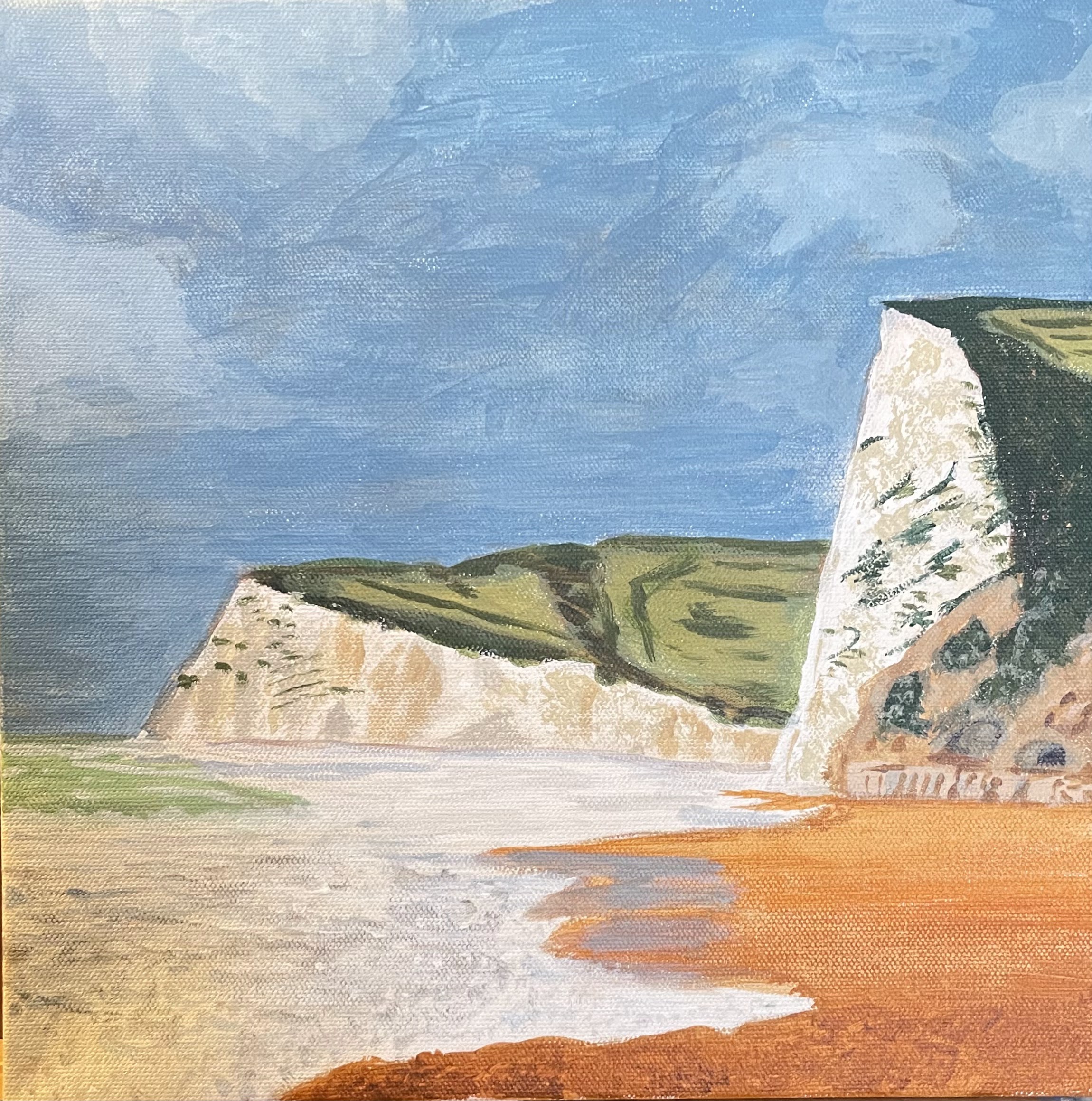
    Slowing Down Enough to Really See

    Sometimes the inspiration for a painting doesn’t come from searching for something new, but from learning to see what is already there.

    When I slow down outdoors — whether walking in the countryside, visiting a botanical garden, or simply stepping into my own garden — I begin to notice things I would otherwise miss. The way light rests on leaves. Subtle changes in color across the sky. The reflections of things in the water.

    These moments rarely feel dramatic or important at the time. They are small and ordinary. But they stay with me, especially if I use my camera to capture those moments.

    Over time, these quiet observations find their way into my paintings.

    Art has taught me that seeing is not automatic. It is something we learn through patience and attention. Painting slows my eyes down. Instead of glancing quickly, I begin to notice shape, shadow, texture, and color more carefully. What once seemed simple becomes layered and alive.

    There is something deeply spiritual about this kind of attention. Slowing down to notice the world can cause us to feel grateful — an acknowledgment that creation is full of beauty if we are willing to pause long enough to see it.

    In a busy world that encourages constant movement and productivity, choosing to observe quietly can feel almost countercultural. Yet these moments of stillness often become the source of creativity. They remind me that inspiration does not come from striving, but from paying attention.

    Many of my paintings begin not in the studio, but in these small encounters with nature — moments when color, light, and stillness come together in a way that invites reflection.

    The garden, the landscape, and even a single leaf can become the beginning of something new on canvas.

    Perhaps creativity sometimes begins with nothing more complicated than this: slowing down enough to really see.

    Many of these quiet moments in nature eventually find their way into my paintings. If you’d like to see how these reflections take shape on canvas, you can explore my artwork here.

  • Resting in the Care of the Shepherd: Psalm 23:1-3

    There are moments in life when exhaustion runs deeper than physical tiredness. We carry decisions, worries, responsibilities, and questions about the future. In those moments, Psalm 23 reminds us of something steady and reassuring: we are not responsible for caring for ourselves alone. We have a Shepherd.

    Psalm 23 opens with one of the most comforting images in Scripture:

    “The Lord is my shepherd, I shall not want.
    He makes me lie down in green pastures.
    He leads me beside still waters.
    He restores my soul.
    He leads me in paths of righteousness for his name’s sake.” (Psalm 23:1–3)

    These verses show us a complete picture of care — not partial, not occasional, but constant and attentive.

    shepherd tending sheep in scenic mountain landscape
    Photo by Ehaan Deva on Pexels.com

    The Shepherd Provides What We Need

    David begins with a simple declaration: “The Lord is my shepherd, I shall not want.” Sheep depend entirely on their shepherd for food, water, safety, and direction. They cannot provide these things for themselves.

    In the same way, Jesus meets the deepest needs of our lives — not always our wants, but what truly sustains us. When we forget this, we begin striving, worrying, and trying to control outcomes. But the Shepherd invites us back to trust.

    Provision is not something we must earn; it flows from relationship with Him.

    The Shepherd Gives Rest

    “He makes me lie down in green pastures.”

    Sheep will not lie down unless they feel safe. Rest requires trust. Sometimes the Shepherd must gently lead us to stop striving so we can receive what we need.

    Green pastures are places of nourishment and peace — not places we force ourselves into, but places the Shepherd leads us. Rest is not laziness; it is trust in action.

    Following Jesus often means learning to slow down enough to receive His care.

    body of water between green leaf trees
    Photo by Ian Turnell on Pexels.com

    The Shepherd Leads with Peace

    “He leads me beside still waters.”

    Still waters are safe waters. Fast-moving water can frighten sheep, but calm water allows them to drink deeply. Jesus does not drive us forward with anxiety or pressure; He leads us with peace.

    When life feels rushed or uncertain, His guidance is steady and gentle. We don’t have to figure everything out at once. We only need to follow the Shepherd’s voice one step at a time.

    The Shepherd Restores the Soul

    “He restores my soul.”

    This is more than physical rest — it is renewal at the deepest level. The Shepherd restores what is tired, discouraged, or worn thin. He brings us back to life again and again.

    Restoration is part of the Christian journey. We wander, grow weary, and lose perspective — and the Shepherd brings us back.

    gray pathway in between grasses
    Photo by Pixabay on Pexels.com

    The Shepherd Leads in the Right Direction

    “He leads me in paths of righteousness for his name’s sake.”

    The Shepherd doesn’t only provide comfort; He provides direction. He leads us into lives shaped by goodness, wisdom, and love. We are not left to find the right path alone.

    And the most reassuring part? This care flows from who He is, not from how well we perform. He leads us for His name’s sake.

    Learning to Rest in His Care

    Psalm 23:1–3 reminds us that the Christian life is not built on striving, but on following. The Shepherd provides, leads, restores, and guides. Our role is to trust His care.

    When we feel anxious, tired, or uncertain, we can return to this simple truth:
    We are sheep with a Shepherd.

    And that is enough.

  • An at Home Daily Art Practice When Life is Busy

    a home art studio with a desk, chair and a window
    Photo by Sydney Moore on Unsplash

    There’s a quiet longing many artists carry — the desire to create consistently, without turning creativity into another task to manage. However, when life feels full, noisy, or demanding, even stepping into your home art studio can feel overwhelming. And yet, the ache to make something remains.

    A daily art practice doesn’t have to be long, impressive, or productive to be meaningful. It can be gentle. It can be small. And it can happen right where you are, at home, in the midst of ordinary life.

    This is an invitation to approach creativity not as a hustle, but as a companion.

    What a Gentle Art Practice Really Means

    A gentle daily art practice is not about discipline or output. It’s not about finishing pieces or keeping up appearances. Instead, it’s about showing up with openness, even when energy is low or time feels scarce.

    Gentle creativity makes room for:

    • Short sessions
    • Imperfect outcomes
    • Intuition over planning
    • Presence over productivity

    When art becomes a place of rest rather than pressure, it begins to nourish you instead of draining you.

    person painting watercolors with a palette
    Photo by Sean Bernstein on Unsplash

    Start Where You Are (Even If That’s Tired)

    One of the biggest myths about daily creativity is that you need a clear schedule, a quiet house, or the right mood. In reality, most meaningful art is made in the middle of life — not after it settles down.

    Your home art studio doesn’t need to be pristine or permanent. It can be a corner of a table, a basket of supplies, or a small space that waits patiently for you.

    If all you have is ten minutes, that is enough.

    A Simple Rhythm for Daily Art at Home

    Rather than a strict routine, consider creating a gentle rhythm. Something that feels supportive instead of demanding.

    Here’s a simple framework you can adapt:

    1. Begin with Stillness

    Before you create, pause. Take a breath. Let your mind settle.

    This could look like:

    • Sitting quietly for a moment
    • Saying a short prayer
    • Reading a line of Scripture or a reflective quote

    Starting this way helps you create from a place of presence, not urgency.

    2. Let Go of Outcomes

    A gentle daily art practice isn’t about finishing something every time you sit down. Some days will feel quiet or uncertain — and that’s okay.

    Therefore, think of your practice as tending a garden, not producing a product. Growth happens slowly, often unseen.

    painter palette on board
    Photo by Olia Gozha on Unsplash

    Creating Space for Art in a Busy Life

    Life doesn’t usually slow down for creativity — we make space for art within it.

    A few ways to do that at home:

    • Keep supplies visible and easy to access
    • Lower your expectations for what “counts” as art
    • Allow unfinished work to remain unfinished
    • Return to the same piece over several days or weeks

    Consistency grows not from effort, but from ease.

    When Art Becomes a Place of Rest

    For many of us, creating at home can become sacred ground — a place where we listen, respond, and rest.

    Art doesn’t need to earn its place in your life by being useful or profitable. Sometimes its greatest gift is simply helping you feel more like yourself again.

    In a culture that rushes, a gentle art practice becomes an act of quiet resistance.

    brown, blue and red paint brushes
    Photo by laura adai on Unsplash

    A Closing Invitation

    If you’ve been longing to create more consistently but feeling overwhelmed by life, let this be your permission to start small.

    Return to your art gently. Let it meet you where you are. Trust that even the smallest moments of creativity are forming something meaningful over time.

    If this way of creating resonates with you, I invite you to linger a little longer.

    Many of the ideas in this post grow out of my own daily art practice — slow, intuitive, and shaped by presence rather than pressure. You can nand see how this gentle rhythm takes visual form through color, texture, and layered abstraction.

    May it encourage you to trust your own creative pace and make space for beauty in the ordinary.

  • 5 Ancient Paths for Finding Rest in a Worn-Out World

    Ancient paths to find the good way to find rest for your soul

    Most of us are tired in ways sleep can’t fix.
    Not just physically tired—but soul-tired.

    We live in a culture that celebrates busyness, productivity, and constant connection. And yet Scripture invites us into something radically different:

    “Stand at the crossroads and look; ask for the ancient paths, ask where the good way is, and walk in it, and you will find rest for your souls.”Jeremiah 6:16

    The ancient paths aren’t outdated or irrelevant. They’re timeless practices that meet us right where we are—overstimulated, distracted, and longing for peace. Here are five simple, life-giving ways to begin walking them.

    1. Scripture Reading & Memorization: Letting Truth Sink In

    Instead of skimming endless feeds, Scripture invites us to slow down and stay awhile. Reading even a few verses a day can re-center your thoughts and remind you who you are and whose you are.

    Memorization doesn’t have to feel like homework. Try writing one verse on a sticky note, saving it as your phone lock screen, or repeating it during your commute. Over time, God’s Word becomes something you carry with you—steady, grounding, and quietly powerful when life feels loud.

    2. Prayer & Contemplation: Making Space to Breathe

    Prayer doesn’t require fancy words or perfect posture. Sometimes it looks like honest sentences whispered while washing dishes or sitting in traffic.

    Contemplative prayer invites us not just to talk to God, but to sit with God. A few minutes of silence, slow breathing, or simply repeating a short prayer can help calm your nervous system and open your heart. In stillness, it’s where we discover we are not alone—and never were.

    Contemplation alone with God Be still and know that I am God
    Contemplation

    3. Worship & Praise: Re-Centering Your Heart

    Worship has a way of lifting our eyes when everything else feels heavy. Whether it’s music in your living room, singing in community, or gratitude spoken out loud, praise shifts our focus from what’s overwhelming to what’s eternal.

    You don’t need a perfect voice or a perfect mood. Worship meets us exactly as we are—and gently reminds us of hope, beauty, and God’s nearness.

    4. Fasting & Simplicity: Creating Room for What Matters

    Fasting isn’t about deprivation—it’s about intention. It might mean stepping back from social media, simplifying your schedule, or choosing to miss lunch in order to pray.

    When we loosen our grip on what constantly demands our attention, we make space for clarity, gratitude, and deeper awareness of God’s presence. Simplicity helps us remember that we don’t have to consume more to feel whole.

    5. Service & Justice: Finding Rest Through Love in Action

    It may sound counterintuitive, but serving others often brings deep rest to our souls. When we step outside ourselves—through kindness, generosity, or advocacy—we reconnect with our purpose.

    Serving doesn’t have to be big or dramatic. It can be as simple as listening well, showing up consistently, or helping someone in need. Love, when practiced, grounds us in what truly matters.

    Stepping stone path take one step at a time no rush
    One step at a time

    Walking the Ancient Path—One Step at a Time

    The ancient paths aren’t a checklist or a spiritual performance. They’re invitations. Gentle rhythms that lead us back to rest, connection, and wholeness.

    You don’t have to do all five at once. Choose one. Take a small step. Walk slowly.

    Rest for your soul isn’t something you achieve—it’s something you receive as you walk the good way.

  • Abstract Art A Sharing of the Soul

    Abstract art is inspired less by what the artist sees and more by what they feel. Instead of copying the outside world, artists draw from emotions, memories, and inner experiences. Intuition often leads the process, guiding choices of color, shape, and movement without a fixed plan.

    The Tide is Turning

    This form of creativity allows freedom and personal expression. Abstract art can be inspired by music, nature, energy, or moments of reflection, turning invisible ideas into visual form. Because it comes from within, each piece invites viewers to find their own meaning and connection.

    As a person of faith, I find that prayer and meditation are practices that inspire my art and make a time of creativity even more satisfying.

  • Restore and Refresh

    Psalm 23 : 1-3 The Lord is my shepherd; I shall not want. He makes me lie down in green pastures. He leads me beside still waters. He restores my soul. He leads me in paths of righteousness for his name’s sake.

    The first few verses of this Psalm fill me with a sense of peace as I imagine myself lying in the grass beside a stream, in the sunlight.

    Merry Meadow

    Another word for pasture here is also Meadow. My idea of a meadow is a grassy field full of spring flowers. In the above painting I used a palette knife to give the impression of colorful wild flowers against a background of mountains, which for me is another place in which I sense the peace of God and am awe inspired by creation.

    Colorado – Steamboat Springs

    On a recent visit to Colorado with my son we happened upon this stream and rested here a while after a long hike. In this shady spot we were refreshed and restored, physically, mentally and spiritually.

    In the busyness of our lives it’s important for us all to have time to think and be reinvigorated. In the words of Jesus to his disciples “Let’s go to a place where we can be alone and get some rest” Mark 6: 31 CEV.

  • Springtime

    I am so excited that Spring is here. A time of new beginnings and nature bursting back to life.

    It is a great time to get out and walk again, to see the leaves budding on the tree branches and the daffodils showing all their glory.

    Nature is one of the main influences for my art so I like to take photos at every opportunity, I don’t use them as subject matter for my paintings but inspiration. They conjure up the emotions I was feeling or the thoughts that were going through my mind at that moment.

    Spring Fever

    Nature also causes me to think about the Creator and elicits thanksgiving and joy for how awesome it all is. From the sunrises and sunsets to the mountains and valleys and everything in between.

    When chaos is all around, to create something that has never been seen before gives me hope and fixes my eyes on God.

  • Hope for the Future

    “Art washes away from the soul the dust of everyday life” Pablo Picasso

    “Art is about changing what we see in our everyday lives and representing it in such a way that it gives us hope.” Kehinde Wiley

    “Art is the highest form of hope” Gerrard Richter

    I am a spiritual person with a strong interior life and art is my way of revealing that. Diving deep into the well of my soul and bringing up to the surface hope and joy, inspiration from the heart.

    I have no idea what I am going to paint before I put the brush or palette knife onto the canvas, but I have a color that speaks to me and I begin with that. The inspiration flows, the image grows and the Spirit whispers to my spirit and the viewers spirit the things we need to hear and receive to lift us and encourage us and fill us with hope for the future.